
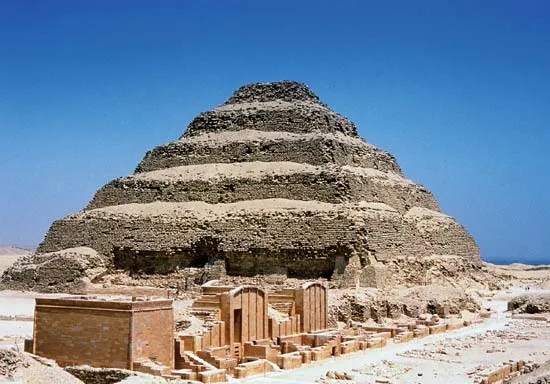
Although most people associate smooth-sided pyramids, such as the ones found at Giza, with Egypt, at their origins pyramids were step-sided, such as the first one, which can be traced back to King Djoser (formerly known as King Netjeryknet) of the Old Kingdom, 3rd Dynasty, c. 2675–2625 B.C.E.
Prior to his reign, ancient Egyptians (both royal and not) were buried in mastabas, oblong-shaped tombs constructed with mud bricks, with sloping sides and a flat roof. These could reach up to hundreds of feet in length and width.
A Different Type of Monument
Imhotep, King Djoser’s chief minister and architect, had ideas for a different type of monument which would serve as the King’s final resting place, for eternity. He designed a tomb built of stone, consisting of six steps, reaching a height of 204 feet, essentially one mastaba stacked on top of each other, with each tier getting progressively smaller.
This tiered, or “stepped” pyramid, became the world’s first true pyramid. Beneath it lies a labyrinth of tunnels and chambers, including the burial chamber of King Djoser, totaling nearly 5.5 km in length. There is a central corridor and two parallel corridors that extend 365 meters. The corridors connect a series of subterranean galleries—nearly 400 rooms in total!—including those that held the family burials and the cache of finely carved vessels and items needed in the afterlife.
You can currently visit the Step Pyramid of King Djoser and walk around the immense complex but you cannot go inside the pyramid itself at this time.
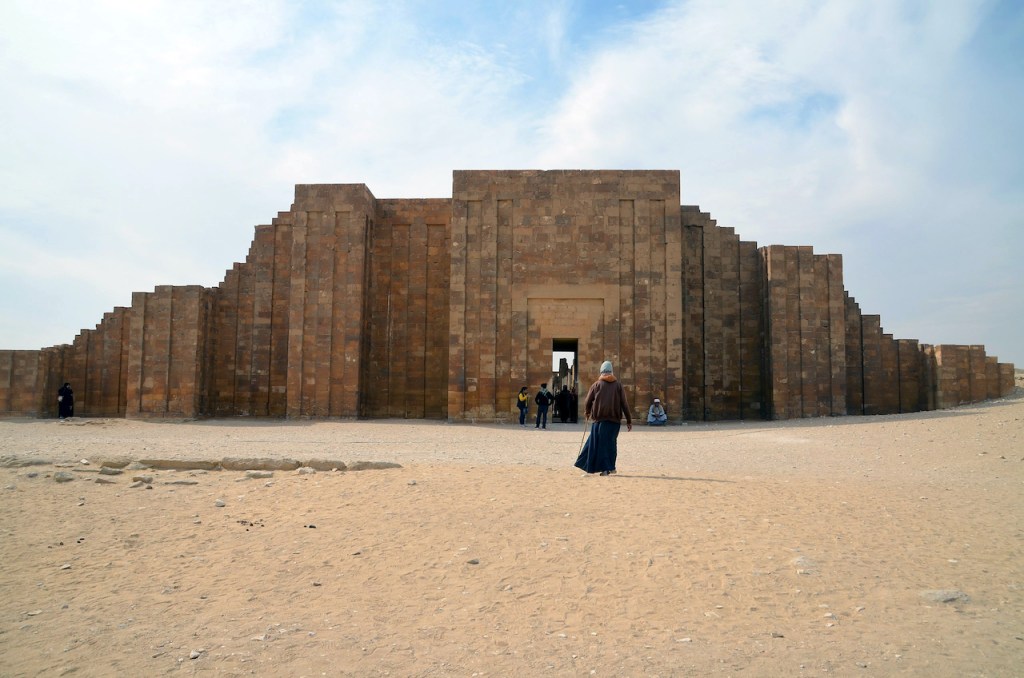
The complex consists of:
The Enclosure Wall and Entrance to the complex (this is my favorite part of the complex)
The entire complex was surrounded by a massive wall, built of fine white limestone blocks and decorated with niches and recesses that mimic the façade of a palace, similar to other earlier mudbrick enclosures from Abydos and elite tombs at Saqqara. However, these 1,680 recessed rectangular panels were carved into the stone AFTER the wall was constructed rather than being shaped as the blocks were laid. Though experts are not sure of its significance, the determination to carve these niches afterwards must have been considered essential since it would have required monumental effort.
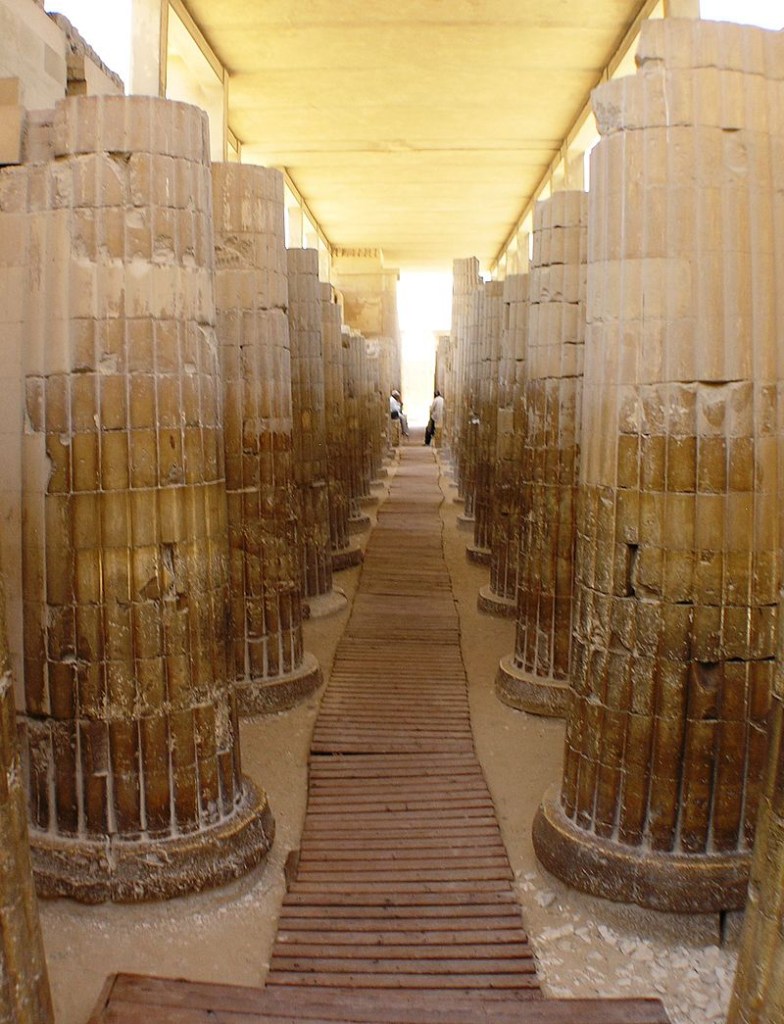
The entry colonnade with columns 6 meters high and a passageway decorated with limestone columns resembling bundles of reeds or palm ribs. These columns, connected to the walls, are believed to be the world’s oldest stone columns. The colonnade leads to various rooms and courtyards within the complex, including the great court, which was likely used for the Heb-Sed festival.
The South Court
As you emerge from the entrance colonnade, you enter a huge open space that is bordered by the Step Pyramid and by the enclosure wall and a mysterious cenotaph (standing monument) known as the South Tomb. Within the open courtyard are a pair of large stones, shaped like a double-horseshoe and approximately 45 meters apart. This area was likely used for rituals.
The T-Temple
Is a small structure which is often referred to as the “King’s Pavilion” (also called ‘Temple T’ based on the external form of the structure). This structure seems to have been a place where the king rested when he was visiting the complex for ritual actions during his earthly life.
Heb Sed Court
The Heb-Sed was an important and ancient royal ritual that was performed to rejuvenate the king and reaffirm the pharaoh’s right to rule. This court would have been the symbolic realm of the ka
North House and South House
Once you cross through the narrow passage at one end of the Heb Sed Court you would see two long courtyards running parallel to the Step Pyramid and separated by a wall. Within each of these courts is a large chapel, probably intended to represent a pair of shrines belonging to the goddesses who embodied Upper and Lower Egypt—the vulture Nekhbet and cobra Wadjet, at Hierakonpolis to the south and Buto in the north.
The Step Pyramid of King Djoser has many “firsts” including:
- A move from Abydos: Djoser’s royal predecessors had created large memorial complexes at Abydos, the ancient site south of Saqqara; Djoser chose his mortuary site at Saqqara, where burials of earlier rulers and VIPs already existed
- Stone instead of mud brick: For the first time, the material used was carefully cut stone rather than mud brick, for better longevity
- All-in one-location: Earlier complexes at Abydos the king’s tomb and other royal enclosures for rituals were physically separated by desert, but the Djoser buildings are located together, in the same complex
- Mix of buildings: There is a mix of buildings, both functional and “dummy” buildings – the “dummy” buildings were most likely intended for the ka’s (spiritual “double”) use in the afterlife
A Bridge to New Ideas
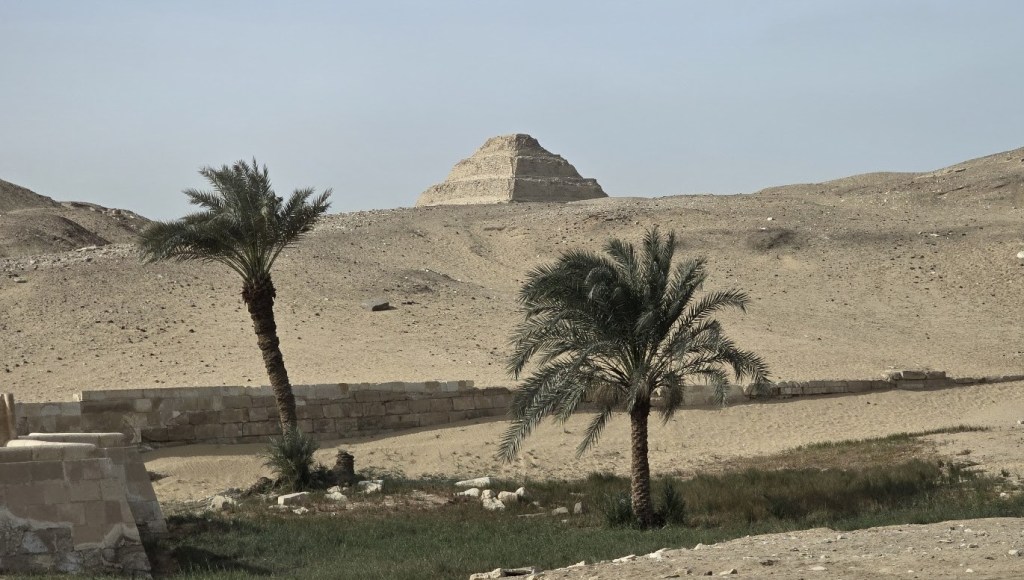
The Step Pyramid serves as a bridge from the earlier funerary architecture of the 1st and 2nd Dynasties to the spark of Egypt’s wondrous Age of the Pyramids.
The Step Pyramid has numerous buildings and features including:
- Enclosure wall and entrance to the complex
- Entry colonnade
- South court
- T-temple
- Heb Sed Court
- North and South Houses
- Step Pyramid which included
- Serdab and temple to the ka
- King’s burial chamber
- Subterranean chambers
- South Tomb
There’s a very detailed article with incredible illustrations and photos on King Djoser’s Step Pyramid here.
Imhotep (“He who comes in peace”), was memorialized even thousands of years after his death for his vision and innovative design . He was honored for his wisdom and was later deified, which was very rare for non-royal individuals.


Leave a Reply